1. About this condition
Congenital lipoid adrenal hyperplasia is a condition where hormones from the adrenal glands and gonads (ovaries and testes) are deficient. This causes the adrenal glands and gonads to enlarge, and fat accumulates in the cells that produce hormones. In some individuals with this condition, the external genitalia may develop atypically.
In Japan, this condition is the second most common form of congenital adrenal hyperplasia, accounting for approximately 4% of all cases.
2. Cause
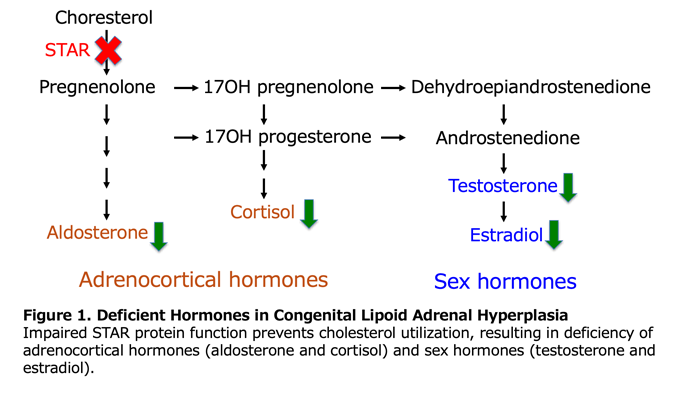
This condition occurs when a protein called StAR does not function properly in the body. StAR plays a role in transporting the material needed to make hormones (cholesterol) into mitochondria, one of the factories where hormones are produced. When StAR does not work, cholesterol cannot be transported efficiently, and hormones are not produced adequately in the adrenal glands and gonads (Figure 1). As a result, fat accumulates in the hormone-producing cells, and the cells multiply, causing the adrenal glands and gonads to enlarge (hyperplasia).
This condition occurs when changes occur in the gene (STAR gene) that serves as the blueprint for the StAR protein. It develops when both genes inherited from both parents have changes. It is commonly seen in East Asians, including Japanese, Koreans, and Chinese.
3. Symptoms
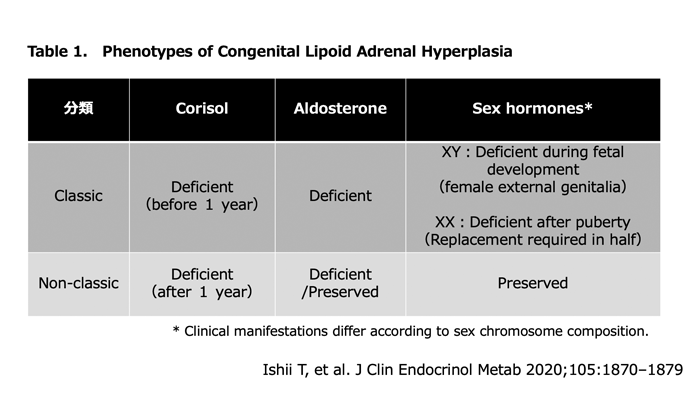
This condition has two types: severe "classic form" and relatively mild "non-classic form" (Table 1).
In the classic form, all adrenal hormones are deficient, and adrenal insufficiency symptoms (easy vomiting, difficulty gaining weight, dark skin, etc.) often appear during infancy. Whether the gonads are testes or ovaries, the external genitalia develop as female type. As growth progresses, hormonal imbalances may occur, leading to irregular menstruation or early menopause.
In the non-classic form, adrenal hormone deficiency is mild, and adrenal insufficiency symptoms often appear after age 1 year. Testicular or ovarian hormones may also be somewhat deficient, but treatment is rarely necessary.
4. Diagnostic methods
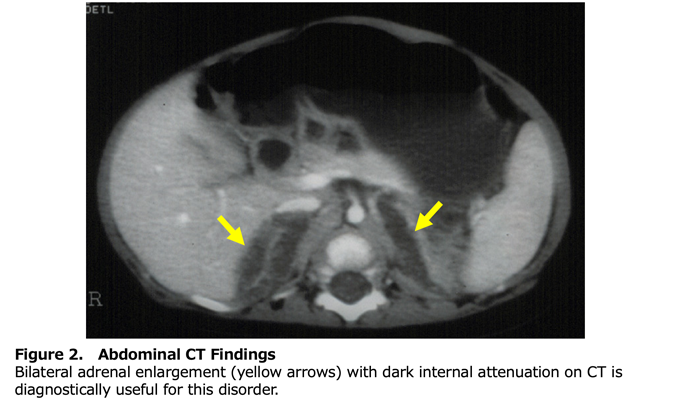
Blood tests and genetic testing are performed to diagnose this condition. When blood levels of adrenal and gonadal hormones are low and levels of hormones that stimulate the adrenal glands and gonads are high, this condition is suspected. Imaging tests may confirm fat accumulation in the adrenal glands (Figure 2). Genetic testing examines the STAR gene, but under the current Japanese healthcare system, it is not covered by insurance (out-of-pocket cost: 49,500 yen).
5. Treatment
Treatment for this condition requires hormone replacement. Adrenal hormone replacement is necessary for most patients. Mainly hydrocortisone and fludrocortisone are used. Sex hormone replacement is performed as needed. Surgery on the external genitalia may also be necessary.
6. Management and prognosis
Patients with this condition may experience adrenal crisis, a sudden onset of severe symptoms. To prevent this, it is important to increase the dose of adrenal hormones when fever, vomiting, or diarrhea is observed (during "physical" stress).
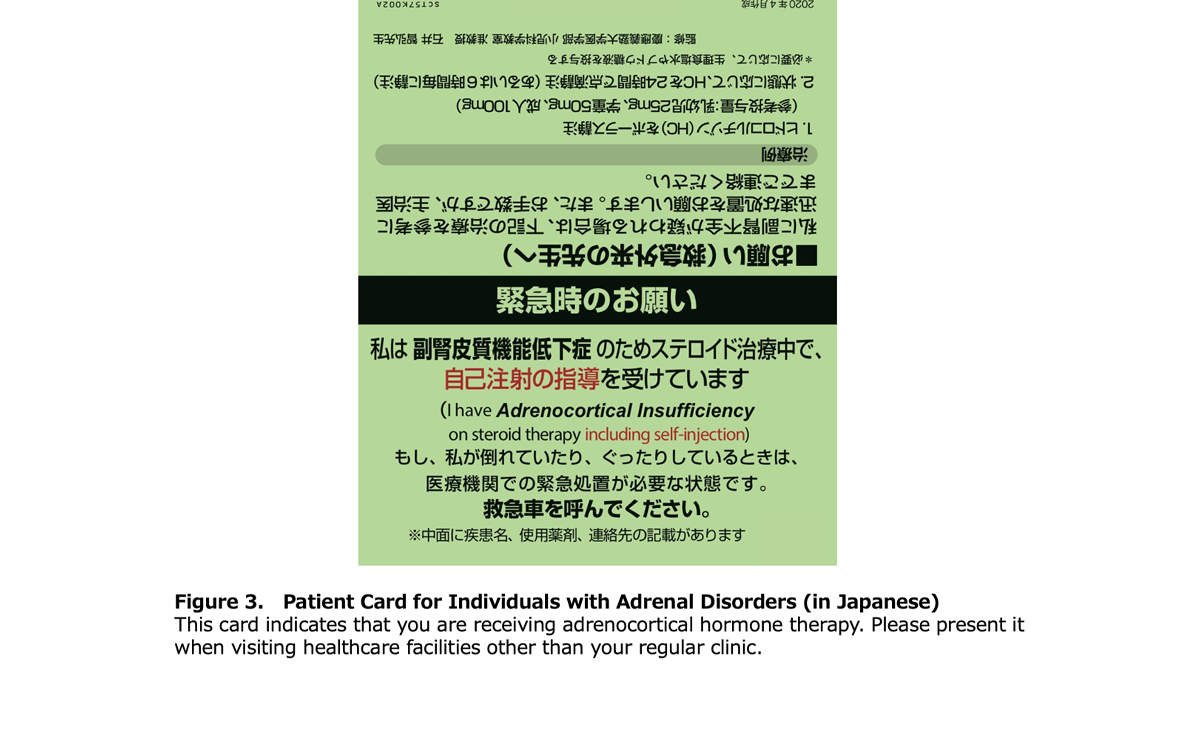
If adrenal crisis is suspected, seek medical attention immediately. If you have been prescribed adrenal hormones for intramuscular self-injection, administer the injection before visiting the hospital. Having a patient card indicating you have an adrenal condition will facilitate smoother medical care (Figure 3).
7. Other information
With this condition, many people can lead healthy lives with appropriate treatment and management.
Symptoms and treatment vary among individuals. If you have questions or concerns, please consult with your doctor.